
Banda Aceh — The Tsunami and Disaster Mitigation Research Center (TDMRC) of Universitas Syiah Kuala (USK), together with the Master’s Program in Disaster Science (MIK) of the USK Postgraduate School (SPS) and the BMKG Class II Climatology Center, held an International Seminar and Focus Group Discussion (FGD) on the BMKG Climate Field School (Sekolah Lapang Iklim) on Tuesday, 24 November 2026.
Themed “Learning from Cyclone Senyar: Inclusive Recovery, Transboundary Geohazard Risk and Climate Resilience for Aceh,” the event took place in person at the TDMRC USK Auditorium and online via Zoom. It marked one year since Tropical Cyclone Senyar triggered a hydrometeorological disaster in Aceh in late November 2025, and formed part of the 24th anniversary (Milad) celebrations of the USK Postgraduate School.
The seminar was officially opened by Dr. Afnan, S.Kom., MM(T)., M.Sc., Ph.D., Deputy Director for Academic Affairs of SPS USK, on behalf of the Director, Prof. Dr. Muslim Akmal, in the presence of TDMRC USK Director Prof. Muksin. She said the theme was timely and relevant, as Cyclone Senyar showed that disaster risks are increasingly complex, interconnected, and not bound by geographic or administrative borders.
Conveying the Prof Muksin message, he recalled the lessons of the 2004 tsunami. “Resilience cannot be achieved through emergency response alone. It requires scientific knowledge, strong institutions, community participation, and sustained international cooperation,” he said. 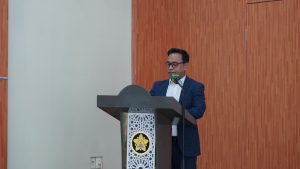
The forum focused on three dimensions: inclusive recovery that restores livelihoods and protects vulnerable groups so that no one is left behind; transboundary geohazard risk that calls for regional cooperation and knowledge sharing; and climate resilience built on stronger climate literacy, early warning systems, and community preparedness.
Three speakers, three lessons
The session was moderated by Dr. Ir. Yunita Idris, S.T., M.Eng.Structure, IPM, Head of the Master’s Program in Disaster Science at USK and Coordinator of the Disaster Resilience Infrastructure Division at TDMRC USK. TDMRC USK Director Prof. Muksin also attended, joined by lecturers, students, government and disaster-management representatives, and online participants.
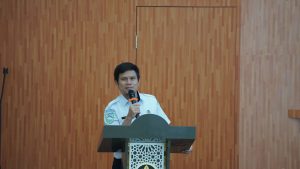 Climate literacy. Muhajir, S.Si., M.Si., Head of the BMKG Aceh Climatology Station, explained that Senyar was a rare phenomenon so close to the equator, bringing persistent heavy rain and extreme rainfall. He said rainfall patterns in Aceh are changing, so climate information and early warnings must reach, and be understood by, communities, including through BMKG’s Climate Field School.
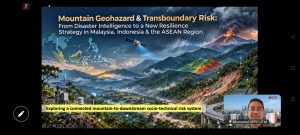 Transboundary geohazard risk. Dr. Khamarrul Azahari Razak of the Malaysia-Japan International Institute of Technology (MJIIT), Universiti Teknologi Malaysia, stressed that flash floods and landslides downstream are largely shaped by conditions in upstream mountain areas and river basins, and that geohazards ignore administrative and national borders. He urged the use of “disaster intelligence”, combining geospatial data, artificial intelligence, and multi-hazard early warning, to support anticipatory action and cross-regional risk governance.
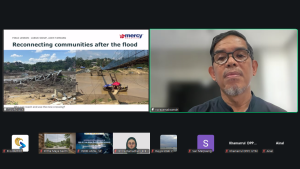 Inclusive recovery. Dr. Hj. Norazam Ab Samah of MERCY Malaysia, who led post-tsunami reconstruction operations in Aceh–Nias in 2004–2008 and has more than 25 years of humanitarian experience in over 30 countries, said recovery is more than rebuilding structures. Relocation and settlement planning must consider site risk assessment, community participation, and sustainable livelihoods, and recovery should be planned before disasters strike.
FGD: climate change is already visible in Aceh
After the seminar, participants joined a Climate Field School FGD facilitated by Prof. Dr. drh. Muhammad Hambal Dr. Yunita Idris, and Rizka Puspitasari, S.Kom., M.Si. Groups discussed climate literacy, transboundary geohazard risk, and inclusive recovery. 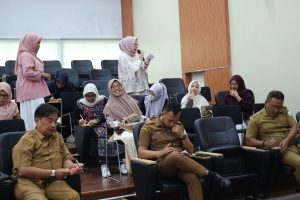
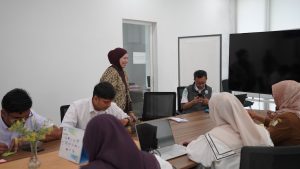
Participants agreed that the impacts of climate change in Aceh are already evident, with rainfall patterns no longer behaving as before and significantly affecting communities. They concluded that public preparedness must be strengthened to face extreme weather events that are becoming more frequent and damaging.
Contribution to the SDGs
The event reflects USK’s commitment to the Sustainable Development Goals (SDGs):
- SDG 13 – Climate Action: strengthening climate literacy and early warning.
- SDG 11 – Sustainable Cities and Communities: disaster risk reduction and settlement recovery.
- SDG 1 – No Poverty: building the resilience of vulnerable communities.
- SDG 10 – Reduced Inequalities: recovery that leaves no one behind.
- SDG 4 – Quality Education: research-based learning for postgraduate students.
- SDG 17 – Partnerships for the Goals: collaboration among BMKG, universities, and international partners from Malaysia.
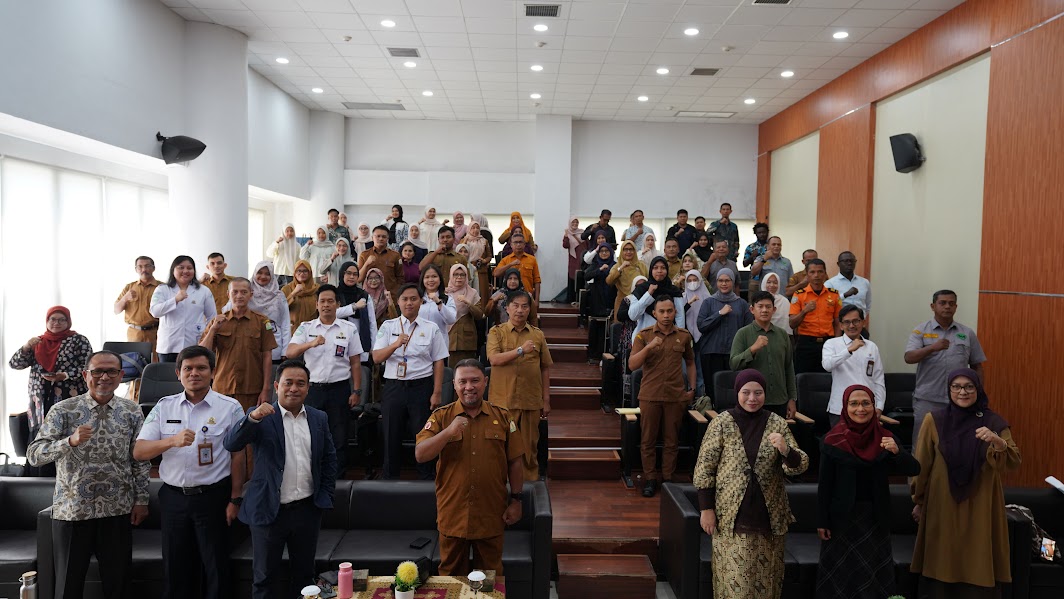
The organizers hope this collaboration among BMKG, MIK SPS USK, TDMRC USK, and international partners will continue through research, education, and community assistance toward a more climate-resilient Aceh.
