
Banda Aceh, 22 August 2026 – The Japan International Cooperation Agency (JICA) team conducted a working visit to Universitas Syiah Kuala (USK) to review the university’s readiness for the development of the USK Disaster-Resilient Teaching Hospital. The visit was part of exploring potential cooperation between JICA and USK to develop a hospital that would serve not only as a center for education and healthcare services, but also as a facility with specialized capacity to respond to emergencies and disasters.
Before visiting TDMRC USK, the JICA team visited dr. Zainoel Abidin Regional General Hospital. The hospital is the main referral hospital in Aceh Province and also serves as a teaching hospital with comprehensive specialist services. It functions as a major referral center for the people of Aceh. The visit gave the JICA team an overview of healthcare needs, referral systems, patient management capacity, and the operational challenges hospitals face during emergencies and disasters. 
The visit continued at the Faculty of Medicine of USK. At the faculty, the JICA team received information about medical education, healthcare human resource development, and the potential integration of education, research, healthcare services, and disaster management. The Faculty of Medicine of USK also plays a strategic role in supporting the development of a teaching hospital focused on disaster preparedness and strengthening healthcare professionals’ competencies.
 The JICA team then visited the Tsunami and Disaster Mitigation Research Center (TDMRC) USK. The delegation was welcomed by the Director of TDMRC USK, Prof. Dr. Muksin, S.Si., M.Si., M.Phil., together with Prof. Ella Meilianda, Coordinator of the Water Disaster Management Division, representatives of the Disaster Emergency Food Division, and several TDMRC staff members and researchers. The JICA team was also accompanied by the Secretary of USK, Prof. Dr. Nur Fadli, S.Pi., M.Sc.
During the visit, TDMRC introduced its research activities and disaster management facilities, developed to strengthen understanding, preparedness, and response to disasters. The JICA team visited the tsunami wave flume, a 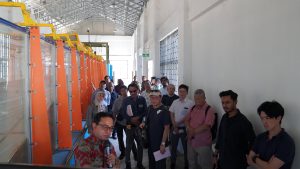 laboratory facility used to study tsunami wave characteristics and test various scenarios and mitigation models. The facility supports research on wave behavior, potential inundation, coastal protection, and the design of more resilient infrastructure.
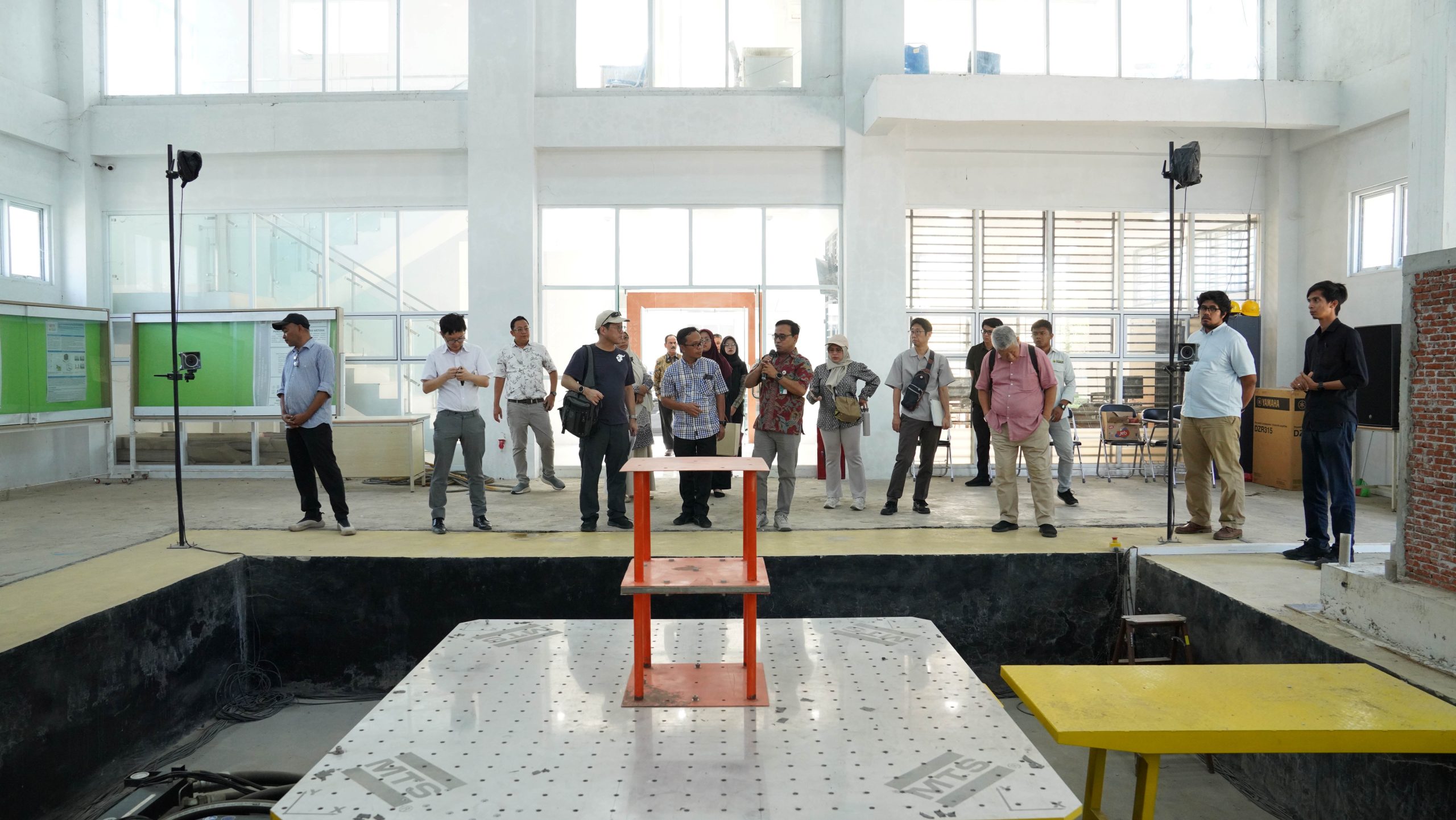
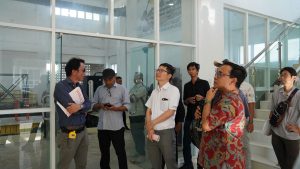 The JICA team also visited the shaking table laboratory, a facility used to simulate earthquake ground motion and assess the response of structures, materials, and building models to different vibration levels. This laboratory has significant potential to support research on earthquake-resistant buildings, construction technology development, and disaster education and training.
In addition, the team visited the real-time earthquake monitoring facility, which continuously monitors seismic activity. The system supports the rapid collection and analysis of earthquake data and can contribute to seismological research, the development of early warning systems, and the provision of information for decision-making during emergencies. 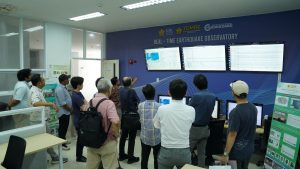
As part of the interactive visit, the JICA team also had the opportunity to try emergency food products developed and introduced by TDMRC. This activity provided first-hand experience of the importance of food supplies that are practical, safe, easy to distribute, have a long shelf life, and provide adequate energy for communities and emergency personnel during disaster response operations. Emergency food supplies can become an essential component of disaster logistics, particularly when transportation access, markets, and cooking facilities are disrupted.
The visit also opened opportunities for discussions on potential research cooperation involving JICA, USK, the Faculty of Medicine, dr. Zainoel Abidin Regional General Hospital, and TDMRC. Potential areas of cooperation include disaster-resilient hospital design, continuity of healthcare services during disasters, structural safety, evacuation management, early warning systems, earthquake monitoring technology, medical logistics, and emergency food provision.
The planned development of the USK Disaster-Resilient Teaching Hospital is expected to become a strategic investment for Aceh. The hospital will integrate healthcare services, education, research, and disaster preparedness. This concept aligns with USK and JICA’s plans to develop a healthcare facility capable of operating under normal conditions and during earthquakes, tsunamis, floods, and other disaster events. USK and JICA have previously discussed developing a teaching hospital with a disaster-resilient concept as a center for healthcare services and education that responds to Aceh’s geographical conditions. USK
Through this visit, USK reaffirmed its commitment to strengthening international cooperation in healthcare, education, research, and disaster management. Cooperation with JICA is expected to support the development of a hospital equipped not only with modern infrastructure, but also with strong risk management systems, qualified human resources, advanced technology, and an extensive research network.
