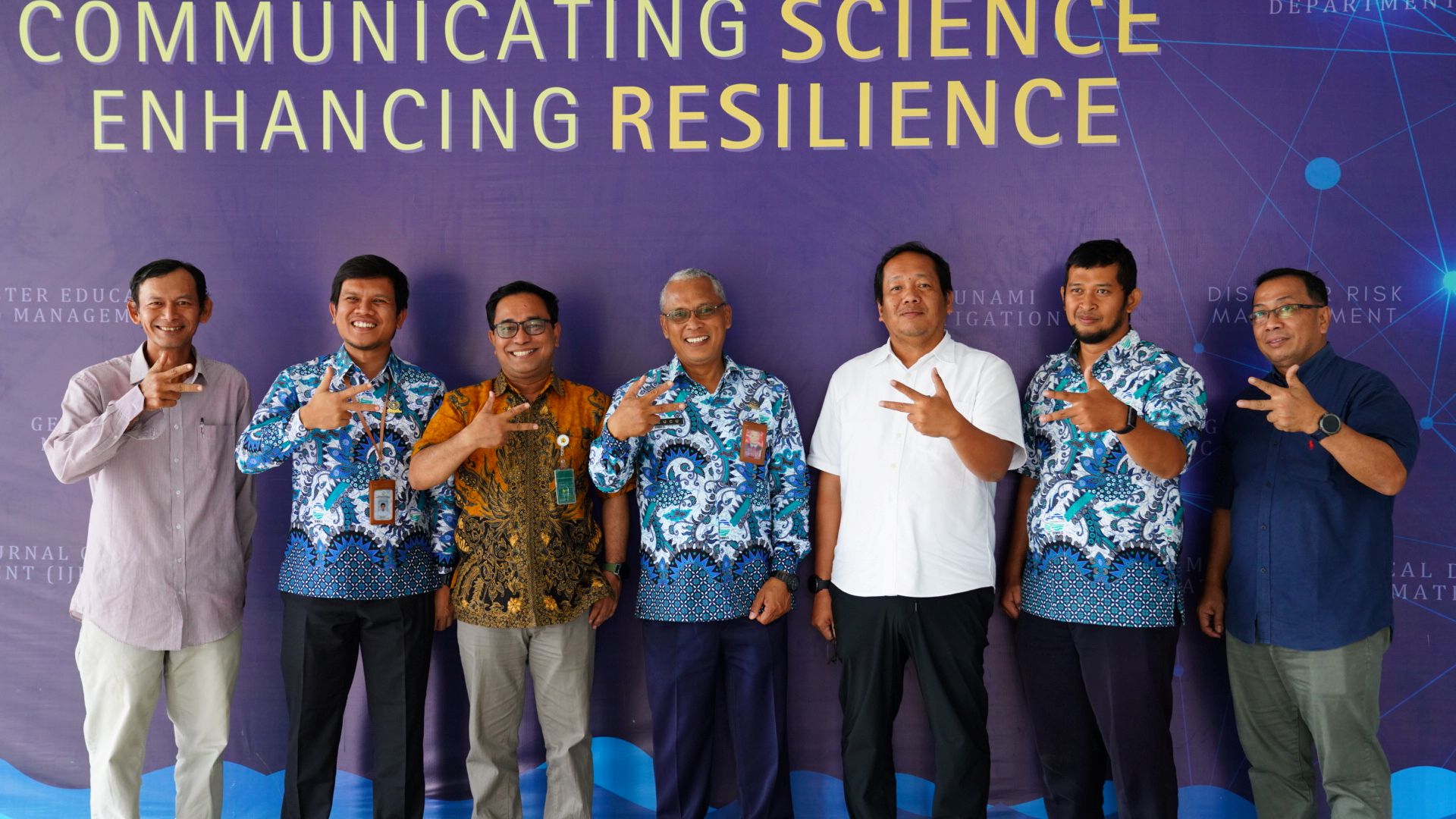

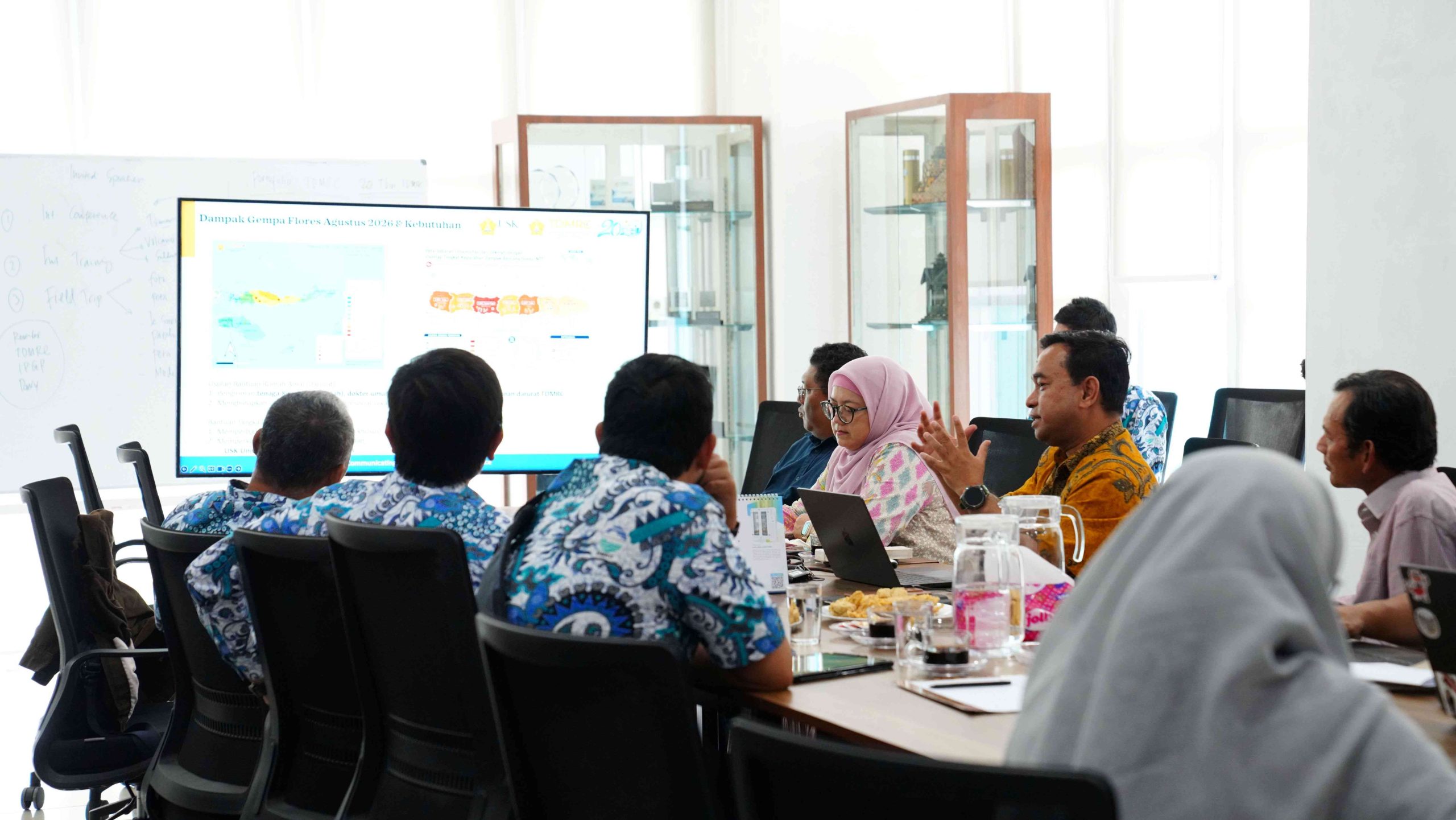
Banda Aceh, Augsut 21, 2026 — Three technical implementation units (UPT) of the Meteorology, Climatology, and Geophysics Agency (BMKG) in Aceh Province — the Class I Sultan Iskandar Muda Meteorological Station (Stamet SIM) Banda Aceh, the Class IV Indrapuri Climatology Station (Staklim Indrapuri), and the Class III Mata Ie Geophysics Station (Stageof Mata Ie) — conducted a joint visit to the Tsunami and Disaster Mitigation Research Center (TDMRC), Universitas Syiah Kuala (USK). The visit addressed potential research collaboration, cooperation on master’s (S2) and doctoral (S3) degree programs, and the latest developments regarding the Flores earthquake.
 The BMKG delegation was led by Cucu Kusmayancu, S.Kom., Head of the Class I Sultan Iskandar Muda Meteorological Station Banda Aceh, together with Muhajir, S.Si., M.Si., Head of the Aceh Climatology Station (Indrapuri), and Zainal Abidin Alatas and team.
The delegation was received directly by the Director of TDMRC USK, Prof. Dr. Muksin, S.Si., M.Si., M.Phil., together with Prof. Dr. Ir. Ella Meilianda, S.T., M.T., Dr. Satriana, S.TP., M.T, and Prof. Dr. Syamsidik, S.T., M.Sc., along with a number of TDMRC researchers and staff. The meeting followed ongoing communication between BMKG and TDMRC, two institutions that share a mandate in geological and hydrometeorological disaster management in the Aceh region, which experienced a major earthquake and tsunami disaster on 26 December 2004.
This visit took place not long after a magnitude 7.7 earthquake struck the Flores Sea region, East Nusa Tenggara, on Saturday, 15 August 2026, at 05:58 WITA. The epicenter was located approximately 30–38 kilometers northeast of Nagekeo Regency, at a depth of 10–15 kilometers. The earthquake triggered a tsunami early warning and caused fatalities and significant damage across several areas of Flores, with thousands of aftershocks recorded more than a week after the main quake.
Several parties noted that this earthquake bears similarities in location and mechanism to the 1992 Flores earthquake, which triggered a tsunami dozens of meters high. This similarity became one of the topics discussed at the meeting, given that Aceh and Flores are both located in earthquake- and tsunami-prone regions of Indonesia.
Points discussed
1. Potential disaster research collaboration: Both parties discussed opportunities for research collaboration in earthquake monitoring, tsunami studies, and hydrometeorological and geophysical disaster mitigation. This collaboration is expected to combine BMKG’s operational data with TDMRC’s research capacity to strengthen early warning systems and disaster risk assessments in Sumatra and other earthquake-prone regions of Indonesia, including lessons drawn from the Flores earthquake.
2. Cooperation on master’s and doctoral programs: BMKG and TDMRC also explored collaboration on human resource development through postgraduate programs, including possible co-supervision arrangements, the placement of master’s and doctoral students’ thesis research within BMKG, and the use of TDMRC’s research findings to support competency development for BMKG personnel in meteorology, climatology, and geophysics. 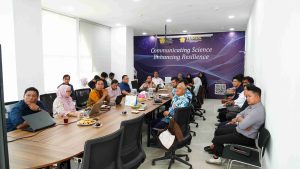
3. Discussion of the Flores earthquake: As part of the discussion, both parties also addressed developments related to the Flores earthquake, including the pattern of aftershocks, the fault mechanism behind the earthquake, and lessons that can be drawn to strengthen the preparedness of coastal communities against potential earthquakes and tsunamis — including its relevance to disaster mitigation efforts in Aceh.
“This visit is intended to strengthen communication between BMKG and TDMRC, particularly in sharing data and monitoring results that can strengthen the early warning system in Aceh. The Flores earthquake is a reminder that preparedness must be continuously updated, not only when an event occurs.” — Cucu Kusmayancu, S.Kom., Head of the Class I Sultan Iskandar Muda Meteorological Station Banda Aceh.
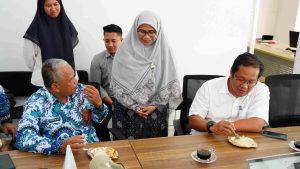
Cucu Kusmayandu and Prof. Syamsidik test emergency food developed by the Disaster Emergency Food team, coordinated by Dr. Satriana.
“From a climatology perspective, we see great potential for research collaboration with TDMRC, particularly regarding climate literacy and how changing weather patterns can affect the resilience of coastal communities to disasters.” — Muhajir, S.Si., M.Si., Head of the Aceh Climatology Station.
“The Flores earthquake shares many mechanistic similarities with earthquakes in the Sumatra subduction zone. Today’s discussion with TDMRC is important for aligning our understanding of similar potential risks in Aceh, and how joint research can support future mitigation efforts.” — Zainal Abidin Alatas.
“TDMRC is open to, and welcomes, this exploration of cooperation. Real-time data and monitoring from BMKG are very much needed to strengthen our research on tsunamis and disasters, while TDMRC’s experience since 2004 can also serve as a shared learning resource, including in responding to events such as the recent Flores earthquake.” — Prof. Dr. Muksin, S.Si., M.Si., M.Phil., Director of TDMRC USK.