

Banda Aceh – On September 18, 2025, the Tsunami and Disaster Mitigation Research Center (TDMRC), Universitas Syiah Kuala (USK), was visited by researchers from Osaka University, Japan. The Osaka University’s delegation was led by Prof. Dr. Eng. Yasushi Sanada, along with two assistant professors, Rokhyun Yoon, Ph.D, and Dr. Eng. Pradhan Sujan (Institute of Science Tokyo). The delegation was also accompanied by Prof. Dr.Eng. Ir. Jafril Tanjung, M.T., from Universitas Andalas, Indonesia. This visitation was directly welcomed by the Director of TDMRC, Prof. Syamsidik. From the TDMRC side, this meeting was also attended by Dr. Yunita Idris, Chief of the Division of Disaster Resilient Infrastructure, TDMRC, Adrian Ulza, M.Sc, member of the Division of Disaster Resilient Infrastructure, and Aulia Khalqillah, M.Si, member of the Division of Geohazards Mitigation.
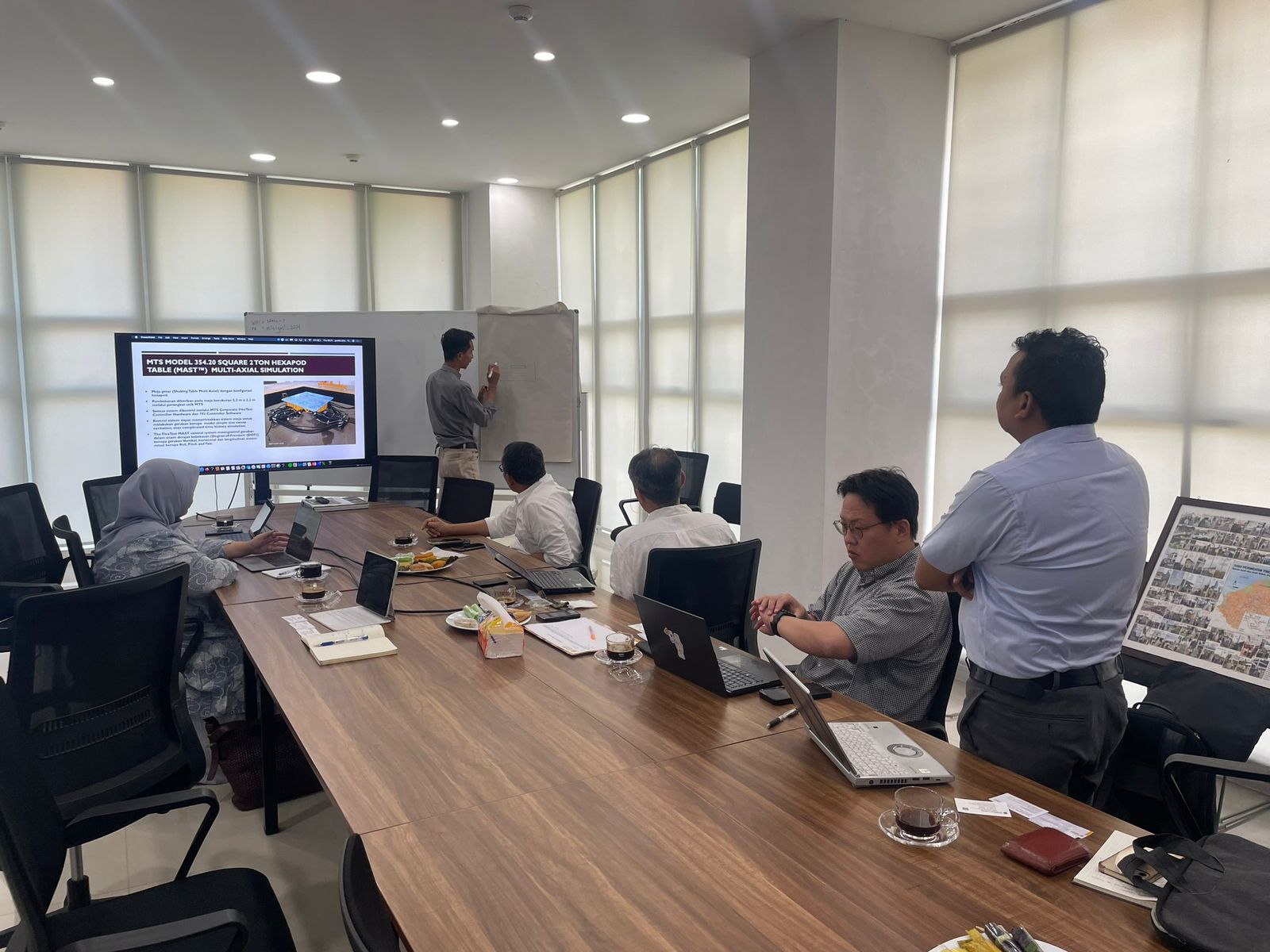
TDMRC USK and Osaka University are discussing a research plan
In this meeting, Prof. Dr. Eng. Yasushi Sanada and his team, in collaboration with Prof. Dr. Eng. Ir. Jafril Tanjung, M.T., presented their research plan for the development of structural engineering research using the Multiaxial Shaking Table facility at TDMRC. The TDMRC, through Dr. Yunita Idris, is kindly welcoming this opportunity. Both sides had a productive discussion related to the details of the research plan and exchanged the initial information as needed for the research purposes.
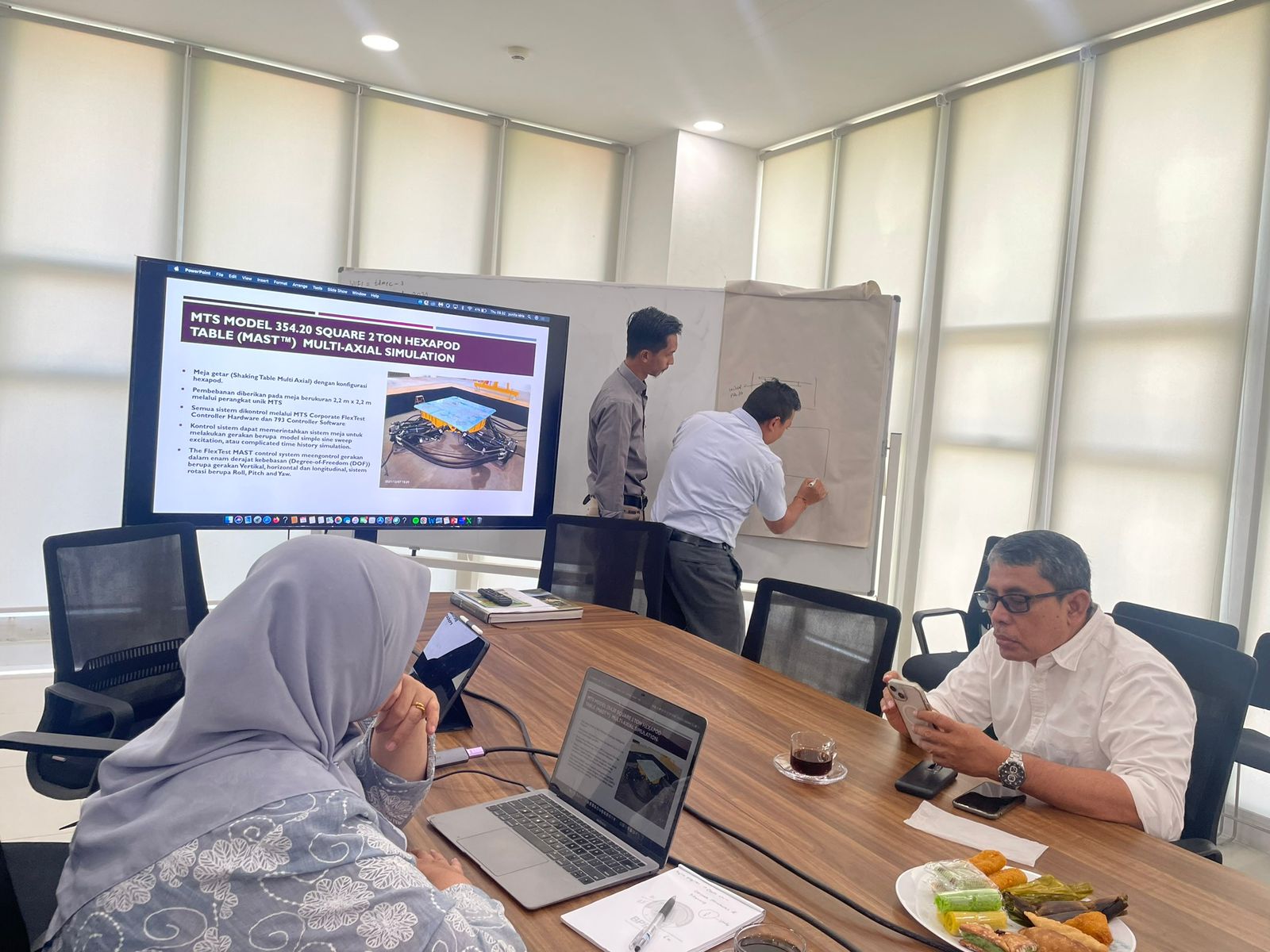
Both parties are discussing a research plan related to the shaking table
“Collaboration with Osaka University opens up significant opportunities for structural testing using shaking table facilities through international research collaboration, which can be utilized to evaluate the performance of building structures under seismic loads. This partnership represents an important step in strengthening research synergy and the development of disaster-related technologies, while also demonstrating a shared commitment to advancing understanding and mitigating earthquake risks. The outcomes of this collaboration are expected not only to enhance research in earthquake engineering and infrastructure resilience but also to provide tangible contributions to both the academic community and practical applications of infrastructure resilience in Indonesia and Japan”, as mentioned by Adrian Ulza, M.Sc.
After the meeting, the delegation had a chance to directly observe the Multiaxial Shaking Table facility. As the information, the Multiaxial Shaking Table has the ability to simulate the earthquake ground motion in 6 degrees of freedom. This system can also be integrated with a motion capture camera.
