

Banda Aceh, April 17, 2026 – The floods that struck Aceh, West Sumatra, and North Sumatra in 2025 remain deeply embedded in our collective memory. Although response efforts have progressed into the reconstruction and rehabilitation phases, many affected communities are still living in temporary shelters (huntara) with significant limitations.
The Tsunami Disaster Mitigation Research Center of Universitas Syiah Kuala (TDMRC USK) was established on October 30, 2006, in the aftermath of the Aceh tsunami. Since its inception, research has focused on disaster-related issues, including disaster mitigation, infrastructure, geological hazards, and related fields. To support these efforts, TDMRC initially operated with 10 divisions. On its 20th anniversary, TDMRC added another division, the Emergency Disaster Food Division. Given the limited conditions during disasters, emergency food has become a critical area requiring special attention.
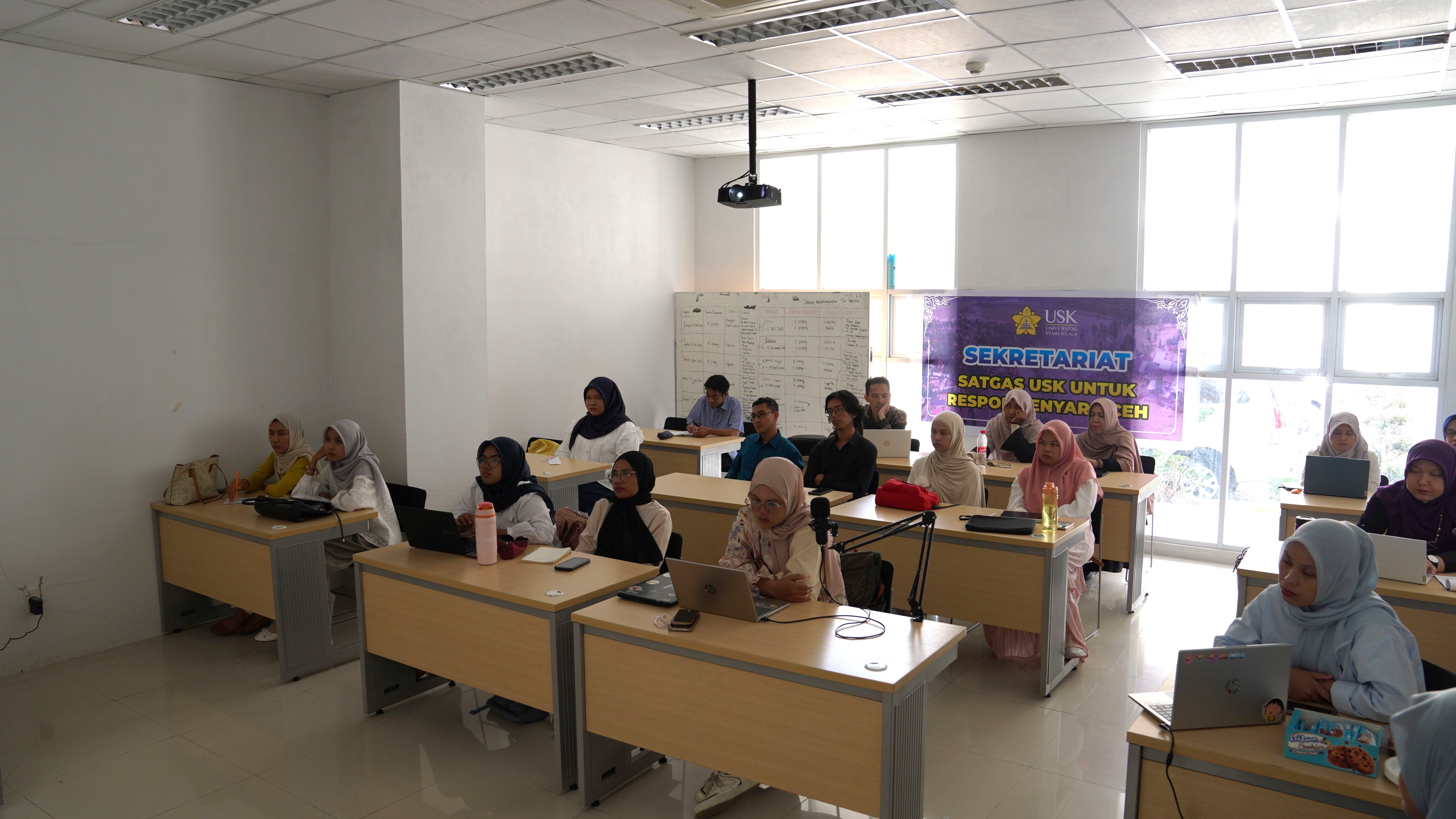
Participants who attended the Emergency Disaster Food Division short course
Following the successful workshop, production, and distribution of instant rice in collaboration with IPB University in late December 2025, TDMRC USK organized another internal activity in the form of a short course delivered via Zoom by Dr. Ir. Tjahja Muhandri, S.TP., M.T., a lecturer from the Faculty of Agricultural Engineering and Technology at IPB University. The session focused on sterilization techniques for producing emergency disaster food.
This activity received full support from the Director of TDMRC USK, Prof. Dr. Syamsidik, S.T., M.T. “This activity serves as a catalyst for the Emergency Disaster Food Division team to initiate research and community service programs in 2026,” said Syamsidik. “We also hope that the laboratory facilities that have been provided can be utilized optimally by both lecturers and students at USK,” he added.
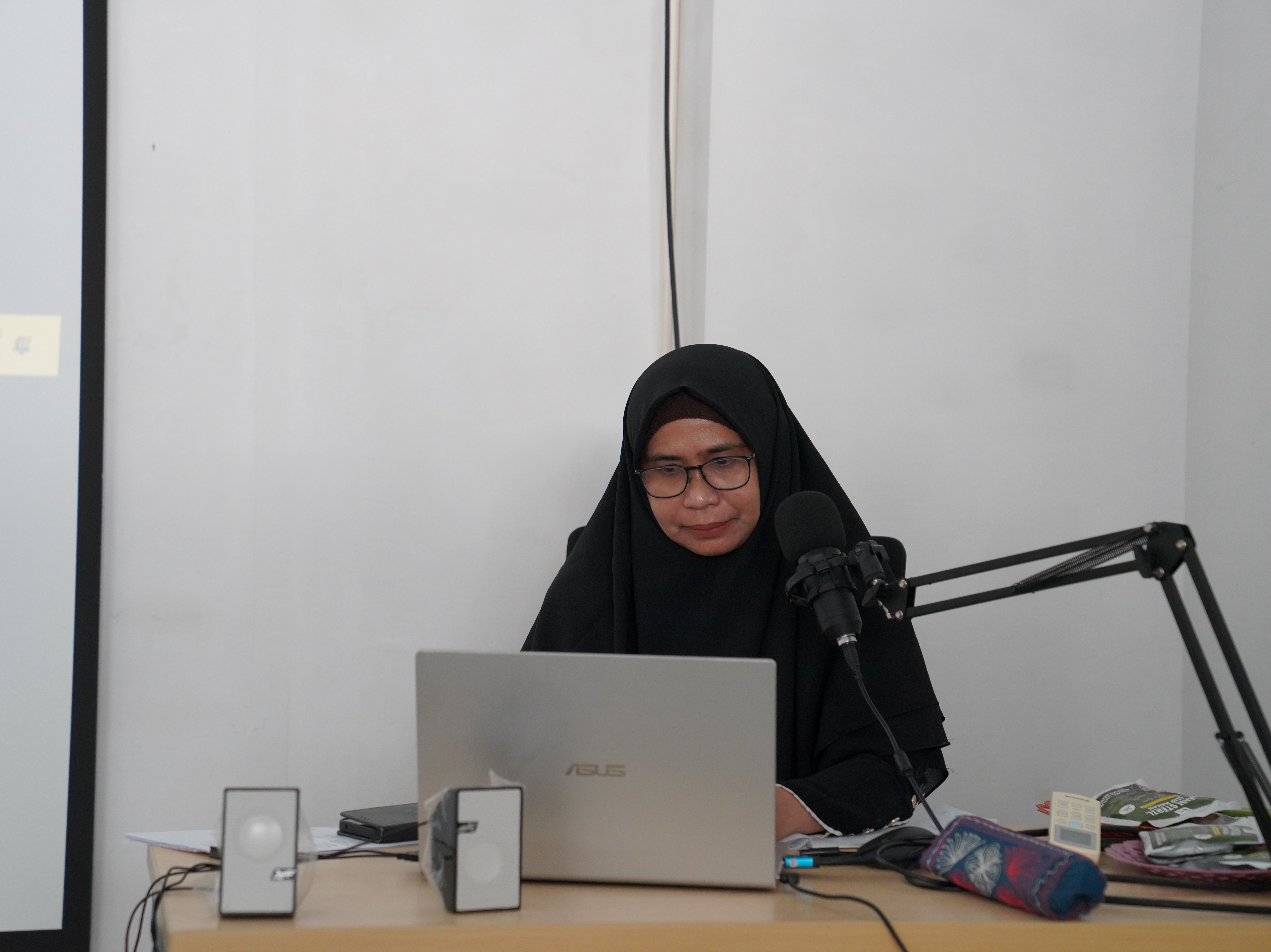
Dr. Satriana, S.TP., M.T
The team, led by Dr. Satriana, S.TP., M.T., aims to integrate several study programs at USK, including Food Technology and Agricultural Products, Fisheries Product Processing Technology, Culinary Education, and Chemical Engineering. “Through this collaboration, we hope that USK, particularly TDMRC, can take an active role in the production of emergency disaster food,” said Satriana. “The activity, held on Thursday, April 16, 2026, was internal and involved 20 participants consisting of lecturers and students who are part of the research team,” she added.
“Emergency food is defined as ready-to-eat food consumed during disasters,” explained Tjahja in his presentation. “It is not a snack, but rather a staple meal consisting of rice and side dishes that provide sufficient energy for survivors, have a long shelf life, and are easy to distribute to disaster locations. Ideally, it should also align with the consumption culture of affected communities,” he stated. “However, emergency food is not intended for long-term consumption as it typically contains low fiber,” he added.
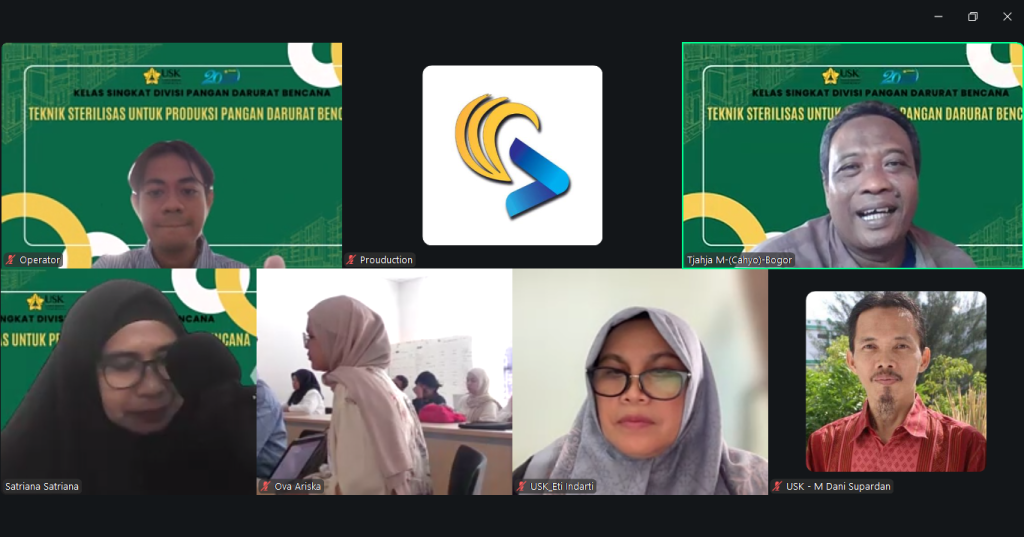
Guest speaker and participants who attended the session via Zoom
In his presentation, Tjahja also highlighted the importance of establishing designated zones for emergency food production facilities to ensure efficient distribution. “I strongly hope that USK can become a center for emergency food production in the Aceh region,” he said. “Emergency food, which generally falls under the category of commercial sterile food, can be produced using simple and applicable sterilization techniques, such as pressure cookers,” he added. “One example is instant rice, which has already been produced by the TDMRC USK laboratory,” he continued.
Satriana concluded the session by outlining TDMRC’s future plan to establish an emergency disaster food laboratory that meets BPOM standards, enabling products to obtain distribution permits even outside emergency response periods. “The team has coordinated with the Aceh BBPOM,” she said. “In addition, facilities for validating heat adequacy are essential to ensure that production processes meet safety standards. This will require financial support from USK,” she concluded. (~Satriana)

