
Lhokseumawe, October 22, 2026 – The Tsunami and Disaster Mitigation Research Center (TDMRC) at Universitas Syiah Kuala (USK) held the first public discussion on preparing the Disaster Risk Assessment (Kajian Risiko Bencana, KRB) document for Lhokseumawe City for the 2026-2030 period. The event took place on Thursday, October 22, 2026, at the Lhokseumawe City Regional Secretariat Auditorium and brought together representatives from the city government, regional agencies, and the academic team from USK.
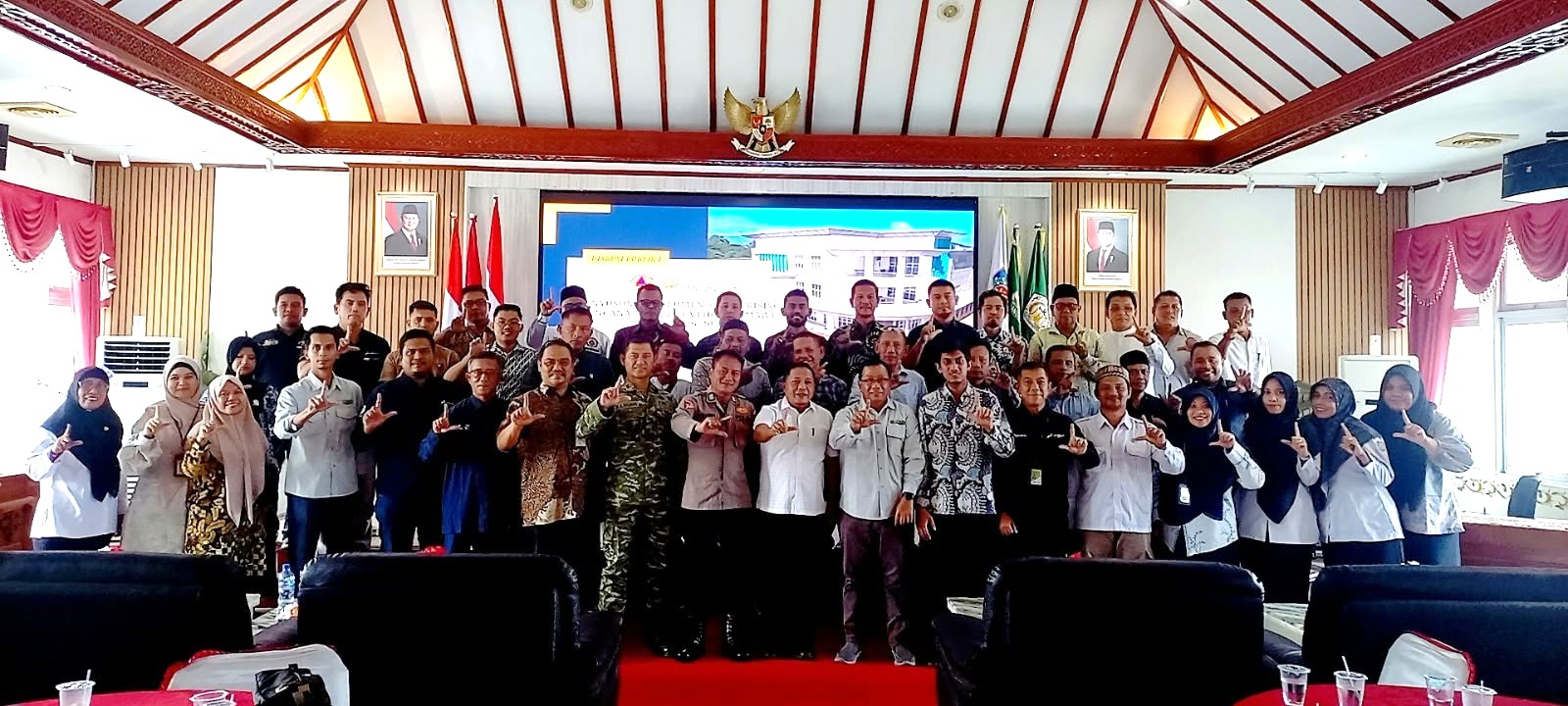
TDMRC USK team members and Lhokseumawe City Government officials pose together after the public discussion
The Disaster Risk Assessment is a key planning document that maps the hazards a region faces, the vulnerability of its communities and infrastructure, and the capacities available to respond. Together, these elements are used to estimate the level of disaster risk. For a coastal city such as Lhokseumawe, a sound assessment is essential to guide risk reduction policies, spatial planning, and preparedness programs for the next five years.
TDMRC USK was represented by its team of experts: Dr. Dedy Alfian, Dr. Tursina, Aulia Khalqillah, M.Si., Ikhwan Amri, M.Sc., Nazriatun Nisa, M.Si., and Eka Oktavianus, M.Si. The team presented the progress made so far and opened the floor for participants’ input.
Participants attend the first public discussion on the preparation of Lhokseumawe City’s 2026-2030 Disaster Risk Assessment (KRB) at the Regional Secretariat Auditorium, Thursday, October 22, 2026
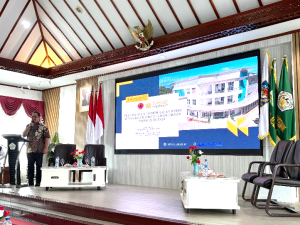
Mirdha Ihsan, S.STP, Acting Assistant for Governance, Special Autonomy, and Welfare, urges regional agencies to coordinate actively with BPBD on the availability of KRB data.
In his opening remarks, Eka Oktavianus, Coordinator of the TDMRC USK Secretariat, said the team has prepared an initial draft of the KRB document. However, the draft is not yet complete, because several key datasets are still needed to accurately assess the hazards and vulnerabilities facing Lhokseumawe. “We ask for the active support and cooperation of all parties in providing accurate data and information, so that this document can truly benefit the community,” he said.
He emphasized that the final document’s quality depends largely on the quality of the data behind it. Complete, up-to-date, and reliable data will allow the risk analysis to reflect real conditions on the ground, so that the resulting recommendations are practical and can be used directly by the city government.
The event was also attended by Mirdha Ihsan, S.STP, Acting Assistant for Governance, Special Autonomy, and Welfare of Lhokseumawe City. In his remarks, he urged the relevant parties to provide the required data promptly. “I ask the relevant regional government agencies to coordinate actively with the Lhokseumawe City Regional Disaster Management Agency (BPBD) to ensure the necessary data is available,” he said.
The discussion marks the first step in a series of consultations planned to prepare the document. Through this participatory approach, TDMRC USK and the Lhokseumawe City Government hope to produce an accurate, accountable KRB that can serve as a reference for disaster risk reduction planning in Lhokseumawe over the next five years.
Contributing to the Sustainable Development Goals
The KRB preparation closely aligns with the United Nations Sustainable Development Goals (SDGs), particularly three of them.
First, it supports SDG 11: Sustainable Cities and Communities. Target 11.5 calls for significantly reducing human and economic losses from disasters, while Target 11.b encourages cities to adopt integrated policies and plans for disaster resilience. By identifying hazards and vulnerabilities in Lhokseumawe, the KRB provides a scientific basis for planning that protects people, homes, and infrastructure.
Second, it contributes to SDG 13: Climate Action. Target 13.1 emphasizes strengthening resilience and adaptive capacity to climate-related hazards and natural disasters. As a coastal city, Lhokseumawe is exposed to hazards that can be intensified by a changing climate, so the risk assessment helps the city anticipate these threats and prepare adaptation measures.
Third, the process itself reflects SDG 17: Partnerships for the Goals. The collaboration between a university research center, the city government, and regional agencies illustrates the multi-stakeholder partnership promoted under Target 17.17. The call for agencies to share data also relates to Target 17.18, which stresses the availability of high-quality, timely, and reliable data to support sound decision-making.
This discussion marks the first step in a series of consultations planned to prepare the document. Through this participatory approach, TDMRC USK and the Lhokseumawe City Government hope to produce an accurate, accountable KRB that serves as a reference for disaster risk reduction planning in Lhokseumawe over the next five years, while advancing the local contribution to the SDGs.
