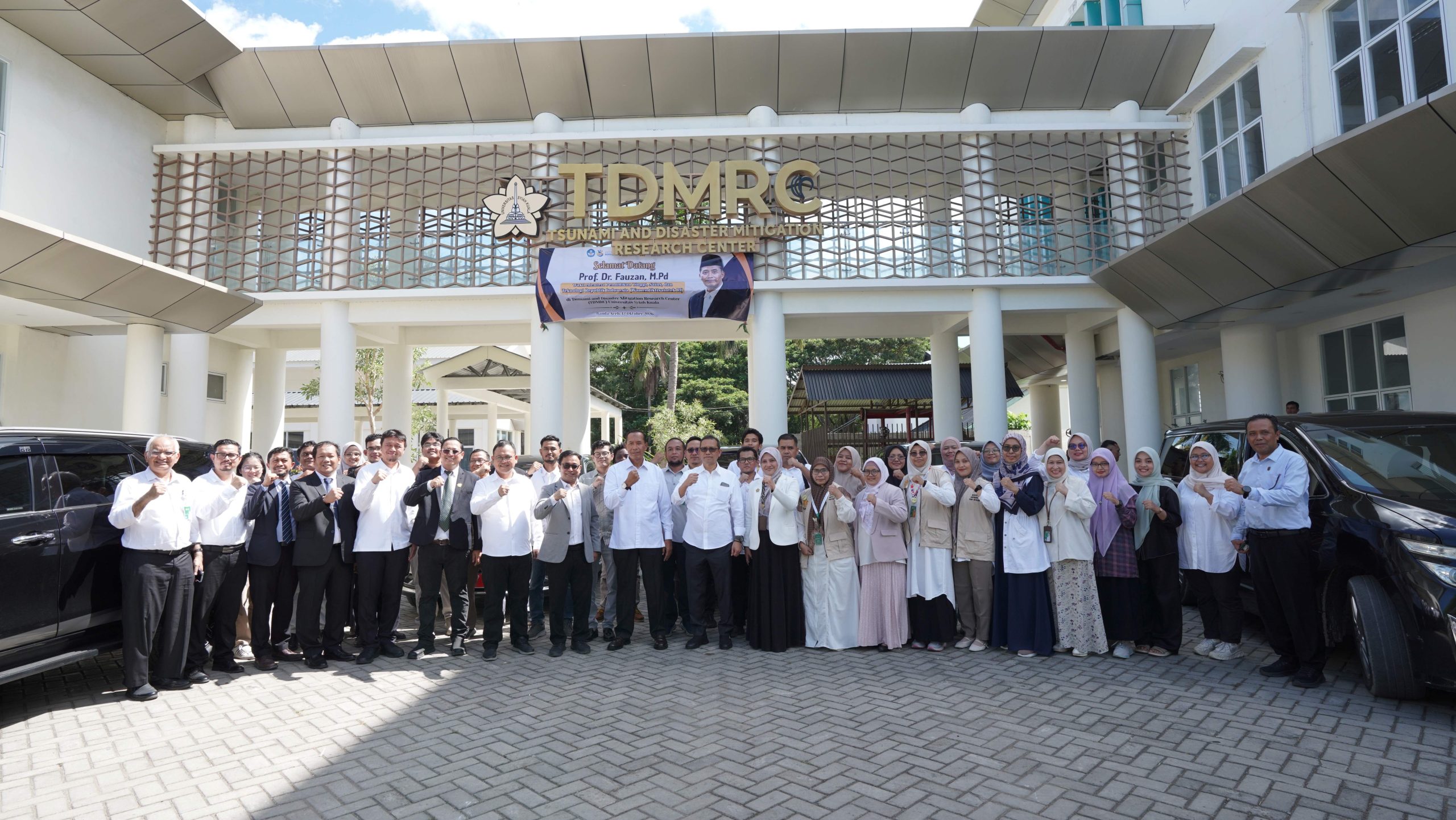

Banda Aceh, October 12, 2026 – The Vice Minister of Higher Education, Science and Technology of the Republic of Indonesia, Prof. Fauzan, visited the Tsunami and Disaster Mitigation Research Center (TDMRC) at Universitas Syiah Kuala (USK) on Monday (October 12, 2026). The visit took place on the sidelines of USK’s 65th Anniversary (Dies Natalis) celebrations.
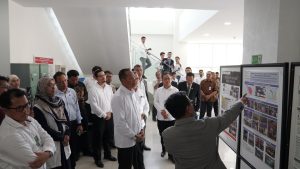
TDMRC USK Director Prof. Dr. Muksin, S.Si., M.Si., M.Phil., along with the heads of TDMRC’s divisions and its researchers, received the Vice Minister. Before touring the facilities, Prof. Fauzan viewed research posters showcasing TDMRC’s work, from tsunami studies to hydrometeorological disaster research.
During the visit, the Deputy Minister toured three of TDMRC’s main facilities:
- Real-Time Earthquake Observatory: a facility that monitors earthquakes in real time. Its data supports rapid earthquake analysis and serves as a reference for researchers and policymakers in determining emergency response measures.
- Tsunami Wave Flume: a wave flume for physically modeling tsunamis in the laboratory. It is used to study wave propagation, coastal inundation, and impacts on structures, supporting research on coastal protection and tsunami mitigation.
- Shaking Table: a device that simulates earthquake ground motion on structural building models. It tests building resilience and supports research on earthquake-resistant design and infrastructure resilience.
 TDMRC USK was established on October 30, 2006, in response to the 2004 Indian Ocean earthquake and tsunami, which claimed around 130,000 lives in Aceh. The center now comprises 10 research divisions, including tsunami mitigation, geohazard mitigation, disaster education, infrastructure resilience, hydrometeorology and climate change, and disaster risk management. TDMRC is also a Higher Education Science and Technology Center of Excellence (PUI-PT).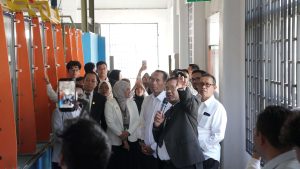
TDMRC aims to produce innovative, applied research in disaster risk reduction; provide consultation, advocacy, education, and training; strengthen cooperation networks; and develop institutional capacity and human resources.
Role during Cyclone Senyar and in the USK Task Force
 When Tropical Cyclone Senyar struck Aceh on November 25–26, 2025, triggering floods and landslides across dozens of districts and cities, TDMRC became involved from the second day after the cyclone moved away from Sumatra. USK established the USK Task Force for the Senyar Response in Aceh (Satgas USK), coordinated by TDMRC together with Rumah Amal USK.
On the ground, the Task Force set up seven field posts to distribute basic logistics and seven community kitchens, and worked in 10 affected districts. On the scientific side, TDMRC provided technical disaster assessments and satellite data analysis that served as a reference for global monitoring agencies, including NASA. The Task Force also provided psychosocial support for affected children. TDMRC staff, who normally focus on research, took part directly in distributing logistics and assisting survivors with their basic needs.
“We are grateful for the Deputy Minister’s visit. TDMRC was born from the painful experience of the 2004 tsunami, and ever since, we have worked to turn it into knowledge that benefits people. Facilities such as the earthquake observatory, the wave flume, and the shaking table, along with our experience in the Cyclone Senyar response, are part of our effort to ensure our research truly meets the needs of the people of Aceh,” said Prof. Muksin.
The Vice Minister’s message
In his scientific address at USK’s 65th Anniversary at the Prof. Dayan Dawood AAC Building, Darussalam, Banda Aceh, Prof. Fauzan stressed that universities must be part of the solution to society’s problems. “Universities should not only produce graduates and research, but must also be part of the solution to the various problems faced by society,” he said.
He added, “Universities must be able to make real contributions to society and regional development. Research results must not stop at the prototype stage, but must be implemented and deliver direct benefits.”
The message aligns with the Diktisaintek Berdampak (Impactful Higher Education, Science and Technology) program, which encourages universities to focus not only on academic activities but also on delivering real solutions for society and regional development. Prof. Fauzan also noted that every university has capable human resources and ongoing research, but much of it has yet to be commercialized or applied at scale.