
Banda Aceh, 07 October 2026 – When a disaster hits, food is often one of the first things people struggle to find. This became clear after Tropical Storm Senyar struck Sumatra in late November 2025. The floods and landslides that followed in Aceh, North Sumatra, and West Sumatra killed more than 1,200 people. At the peak, hundreds of thousands had to leave their homes.
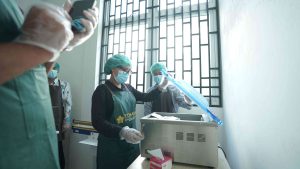
A participant uses a vacuum sealer to pack the emergency food. Sealing is one of the key steps to keep food safe and long-lasting in storage.
Based on that experience, the Tsunami and Disaster Mitigation Research Center at Universitas Syiah Kuala (TDMRC USK) began a hydrometeorological disaster preparedness training on 7 October 2026. The first day focused on making long-lasting emergency food. Local students, international students, and school teachers took part. The two-day training runs from 7 to 8 October 2026. It is part of the TDMRC IN-SAINTEK 2026 Program, “Science and Education for Resilience (SERASI) on Hydrometeorological Disaster Risk.” The program is supported by the Ministry of Higher Education, Science, and Technology through the Directorate General of Science and Technology. TDMRC USK says the program helps connect disaster research with communities’ practical needs.
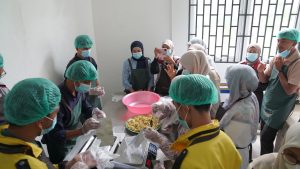
Participants wear aprons, hairnets, masks, and gloves as they portion and pack emergency food into pouches at TDMRC USK on 7 October 2026.
TDMRC USK Director Prof. Muksin said research results should become skills that people can use in daily life. “We want disaster knowledge to be closer to the community. Through this training, students and teachers learn to recognize risks and understand the steps they can take to prepare in their own environments,” Prof. Muksin said.
In the practical session, participants learned the basics of preparing disaster food. They also learned how to keep food clean and safe and store it so it stays fresh longer. “We want participants to understand how to prepare emergency food that lasts, while paying attention to hygiene, food safety, and storage. We hope this skill helps participants and their families get ready for a disaster,” said Prof. Sri Haryani.
The training aims to build participants’ ability to adapt by improving their knowledge, technical skills, and data-based decision-making. Having students from different backgrounds together with school teachers also gives them a chance to share experiences that can help reduce disaster risk in their communities.
On the second day, 8 October 2026, participants will join three sessions: WebGIS SINFRA-SENYAR training, community-based flood early warning system training, and emergency water filter making.
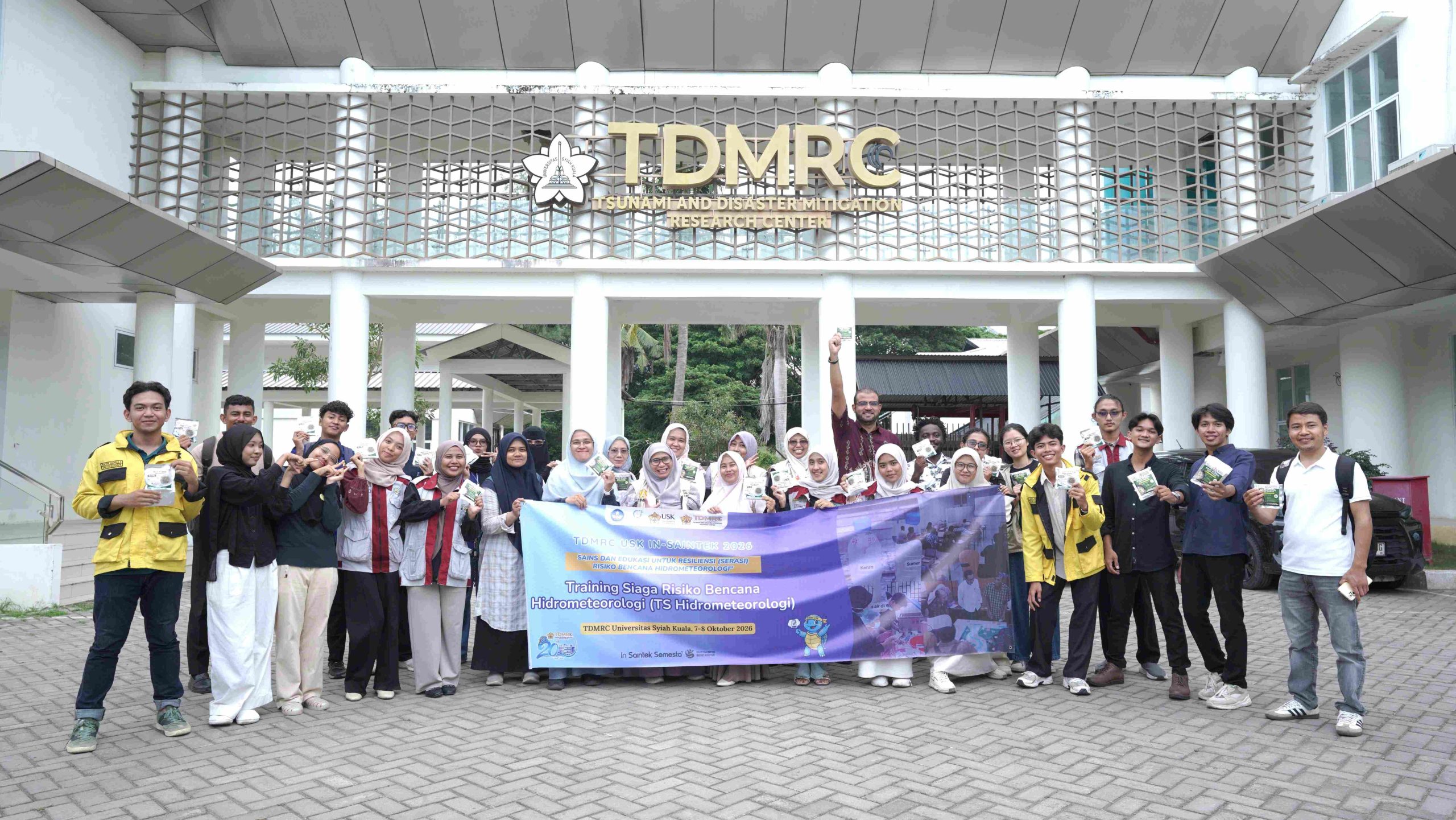
Students, international students, teachers, and the TDMRC USK team pose with the training banner and their packaged emergency food in front of the TDMRC USK building after the first day of training.
